
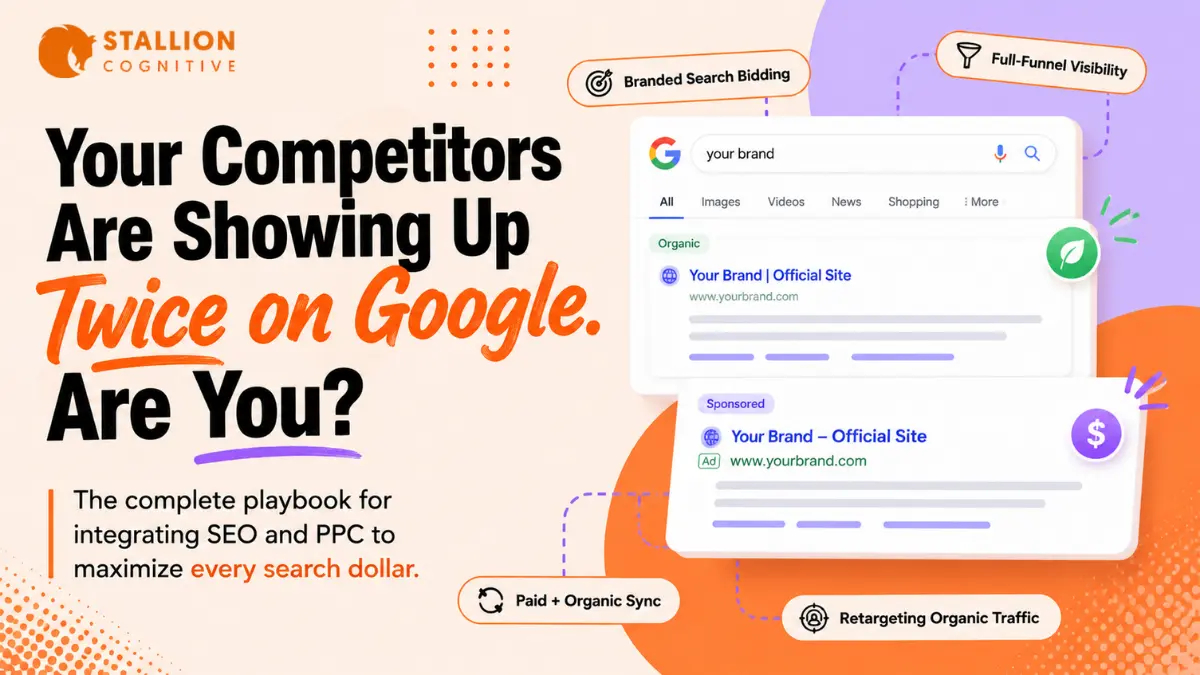
Most marketers were handed a false choice years ago: spend on SEO or spend on PPC, then pick the lane the budget allows. That framing still costs businesses sales in 2026. When you combine SEO and PPC, the two channels stop fighting over the same dollar and start handing each other data, coverage, and buyer intent.
Here's what really happens when one brand shows up twice on a single results page. You'll see how to pass keyword insights between teams, the five integration plays that actually move revenue, and where these programs quietly break. Skip the expensive mistakes in your ppc campaign and you've got a search engine that compounds.
Why PPC and SEO Stopped Being an Either/Or Choice
Treating SEO and PPC as rivals made sense when budgets were tiny and search pages were simple. That world is gone. In 2026 a single query can surface paid ads, a local pack, and an AI Overview before the first classic blue link even appears.
So the brands winning attention are the ones holding several of those slots at once. The whole page is the battleground now.
Here's the deal: the either/or model broke for three concrete reasons.
- Crowded results pages: Ads, shopping carousels, maps, and AI summaries push organic links far down the screen.
- Shared intent: The same buyer clicks an ad on Monday and reads your organic guide on Thursday before ever converting.
- Wasted signals: Run the two channels in separate silos and you throw away the keyword data each one generates daily.
Once you accept that one page can hold several of your listings, the obvious question is what that double exposure actually buys you.
What Happens When You Use Both SEO and PPC Strategies
Show up as both the top ad and the top organic result for a query, and something measurable happens. Click-through climbs. Brand recall roughly doubles, and competitors lose the cheap interception they'd normally pull off. Older Google research put combined first-position presence at close to half of all clicks on the page.
The two channels cover different blind spots, which is why owning both beats doubling down on either one.
| Factor | SEO | PPC |
|---|---|---|
| Speed to traffic | Weeks to months | Same day |
| Cost per click over time | Drops as rankings hold | Holds or rises |
| Trust signal | High, because it's earned | Lower, because it's labeled |
| Best for | Long-term authority | Launches, promos, testing |
The numbers back the overlap. The average Google Ads click-through rate across industries sits near ppc ad performance. 6.66%, per WordStream's 2025 benchmarks, while a strong organic position pulls a far larger share of clicks. Organic also tends to convert at a higher rate than paid search, according to First Page Sage's 2025 data.
Pair them and you catch the user who scrolls past ads plus the one who clicks the very first thing they see.
Coverage is the visible payoff. The quieter advantage shows up in the data each channel quietly hands the other.
How Do You Share PPC Data Integrating SEO Results?
Start with paid search, because it settles a question SEO needs months to answer: which keywords actually convert. PPC buys that intelligence in days. Feed the proven money terms into your content roadmap, then route organic intent findings back to sharpen ad targeting and Quality Scores.
The flow runs both directions, and each direction pays.
- PPC feeds SEO: the keywords converting in your campaigns are validated revenue terms, so move them to the front of your content queue.
- SEO feeds PPC: organic pages with low bounce and long dwell time show you the messaging to mirror in ad copy.
- Both ways: negative keyword lists from paid reveal the dead-end queries you should avoid chasing organically.
Now for the mechanism most teams miss. Google rewards ad relevance with a Quality Score, and a higher score lowers your cost per click. Your strongest organic pages are already tuned for intent, which makes them excellent ad destinations that quietly trim what you pay. That same intent work powers durable SEO lead generation long after a campaign ends.
Knowing the theory is one thing. Running the plays in a comprehensive marketing strategy is where revenue actually shows up.
5 Ways to Combine SEO and PPC Work for Better ROI
You came for tactics you can run this quarter, so here they are. Five integration plays deliver the clearest revenue lift, ordered roughly by how fast they pay off. None demand a bigger budget. They demand tighter coordination between whoever owns paid and whoever owns organic.
| Tactic | Best for | Payoff speed |
|---|---|---|
| Bid on your branded terms | Defending high-intent traffic | Immediate |
| Test keywords in PPC, scale in SEO | Validating content bets | 1-3 months |
| Retarget organic readers | Recovering lost visitors | Weeks |
| Mirror top pages in ad copy | Lifting Quality Score | Weeks |
| Cover gaps with paid while SEO ramps | New or tough markets | Immediate |
1. Bid on Your Own Branded Terms
Plenty of owners hate paying for clicks on their own name. Competitors running conquesting ads against your brand are exactly why you should.
- Best for: businesses whose rivals bid on their brand name.
- Why it works: a branded ad stacked on your organic listing buries competitors below the fold.
- Effort: low, with a small budget and fast setup.
2. Test Keywords in PPC, Then Scale the Winners in SEO
Run a small two-week campaign across ten target keywords. The ones that convert tell you precisely where your next 2,000-word guide should point.
- Best for: teams unsure which topics deserve heavy content investment.
- Why it works: real conversion data beats keyword-tool guesses every single time.
- Effort: medium, since it needs conversion tracking wired up properly.
3. Retarget Your Organic Readers
Most blog visitors leave without buying anything. Retargeting ads pull those warm readers back at a fraction of cold-traffic cost.
- Best for: content-heavy sites with strong traffic and soft conversion.
- Why it works: warm audiences convert several times higher than first-time visitors.
- Effort: low to medium.
4. Mirror Your Best Organic Pages in Ad Copy
Your highest-dwell organic page already proved its angle lands with readers. Reuse that exact message in your ad headlines.
- Best for: accounts with decent organic data and weak ad relevance.
- Why it works: matched messaging lifts Quality Score and trims cost per click.
- Effort: low.
5. Cover SEO Gaps With Paid While Rankings Build
New site, or a brutally competitive niche? You can't sit idle for six months waiting on organic to land.
- Best for: product launches and crowded local markets.
- Why it works: paid keeps leads flowing while organic authority compounds underneath.
- Effort: medium, depending on budget. Run a local SEO audit first so the spend points at pages that can eventually rank on their own.
Run even two of these well and the results compound. Skip the coordination, though, and the same plays quietly drain budget.
Where SEO and PPC Integration Goes Wrong
Combining channels looks clean on a slide. In practice the wheels come off when two teams chase different goals on separate dashboards. The most expensive failures come from coordination gaps nobody catches until the monthly report reads worse than running each channel alone would have.
Four breakdowns show up again and again.
- Cannibalizing your own clicks: Bidding hard on terms you already rank first for can pay for traffic you'd have gotten free.
- Mismatched landing pages: Pointing ad clicks at a thin page tanks Quality Score and burns budget fast.
- Siloed reporting: When paid and organic report in isolation, nobody sees the full customer journey.
- Ignoring AI surfaces: Optimizing only for blue links misses where attention is actually moving.
Word of caution on that first one. The branded-bidding advice carries a real caveat: if no competitor bids on your name and you already own the top organic spot, those ad dollars may be redundant. Test your SEO strategies. Pause brand ads for two weeks and watch whether total clicks actually fall.
Most of these failures trace back to measuring the wrong surface, and one surface now dominates the rest.
What AI Overviews Mean for Combined Search
AI Overviews changed the math this year. Google's generated summaries now sit above most organic results, pushing classic links down and trimming organic click-through on plenty of informational queries. That development pushes paid placement and well-structured organic content to work as a pair.
Three moves keep you visible as these summaries expand.
- Win the citation: Pages structured for clear, direct answers get pulled into AI summaries and earn visibility without a top-ten rank.
- Hold paid coverage: Ads still render above and around AI Overviews, so paid guarantees you a slot regardless.
- Track all three: Measure organic, paid, and AI-surface presence in one view instead of three.
Structuring content for these surfaces, a discipline now called generative engine optimization, increasingly decides whether you appear at all. And as AI Overviews reshape local search, the businesses tracking every surface together are the ones still capturing demand.
The Real Question
The teams pulling ahead this year quit asking which channel wins and started asking how each one can sharpen the other. Your competitors are likely already bidding on the gaps your organic rankings haven't filled yet. Where does that leave the traffic you're losing in between?
Want both channels working as one revenue engine instead of two line items fighting for budget? Stallion Cognitive builds integrated search programs that put your brand in front of buyers wherever they're looking.
Frequently Asked Questions
Does running PPC directly improve my organic rankings?
None of your ad spend feeds Google's ranking algorithm directly. Paid and organic stay separate systems. The lift is indirect: PPC data sharpens your content targeting, and combined SERP presence raises clicks and branded searches that can help organic momentum over time.
How should a small budget be split between SEO and PPC?
Sixty-forty toward SEO works for most small B2B firms after durable traffic. Tilt more toward PPC when you need leads this month or you're testing a fresh market. Revisit the split each quarter as organic rankings mature and your cost per lead shifts.
What's the risk of launching both channels at once?
Spreading a thin budget across two channels can leave both underfunded and underwhelming. Smaller firms often do better sequencing the work: launch PPC for fast data and leads, then reinvest those learnings into SEO once a winning keyword set emerges.
Which tools help manage SEO and PPC work together?
Semrush and Ahrefs both track paid and organic keywords in one dashboard, which makes shared analysis far easier. Google Search Console paired with Google Ads gives you the raw data for free when budget is tight. Pick one source of truth and commit to it.
How fast will a combined strategy show results?
More than most guides admit, the two timelines diverge. PPC can produce leads within days of launch, while the SEO half usually needs three to six months to compound. Judge the program on combined pipeline rather than channel-by-channel speed.